One thing I had in abundance in my Pennsylvania garden was beneficial insects. Ladybugs, praying mantises, spiders, dragonflies, bees, earthworms, you name it, we had it in our 1/4 acre yard. When I first started gardening, I didn’t plant to attract bugs. But, as I learned more about organic gardening, I started planting to get some help.
Here in Virginia, I’m starting again from scratch, though more than 30 years of gardening means beginning with a plan. Dill, Common Yarrow, Cosmos, Marigold, Lemon Balm, Parsley, Borage, Dara, Mint, Hyssop, Echinacea, and Rudbeckia are all plants that attract a wide variety of insects to the yard. I’m growing many of them from seed either inside a greenhouse, by winter sowing, or direct seeding.
Don’t limit yourself to what you plant in one particular year. This year, I let arugula overwinter and produce flowers this year. I also allowed bok choy which I grew this year to produce flowers and then seeds. Also, keep an eye on the weeds that pop up. If they’re not invasive, they can be another way to bring the good guys into your garden.

This Indian Tobacco is a volunteer weed that popped up along the edge of the bed next to our garage. Considered a toxic weed (when eaten), it is not invasive. Considering it prefers meadows, fields, roadsides, waste places, and open woods, I was surprised to see it growing in good garden soil. Indian Tobacco should have blue flowers which will attract hummingbirds.
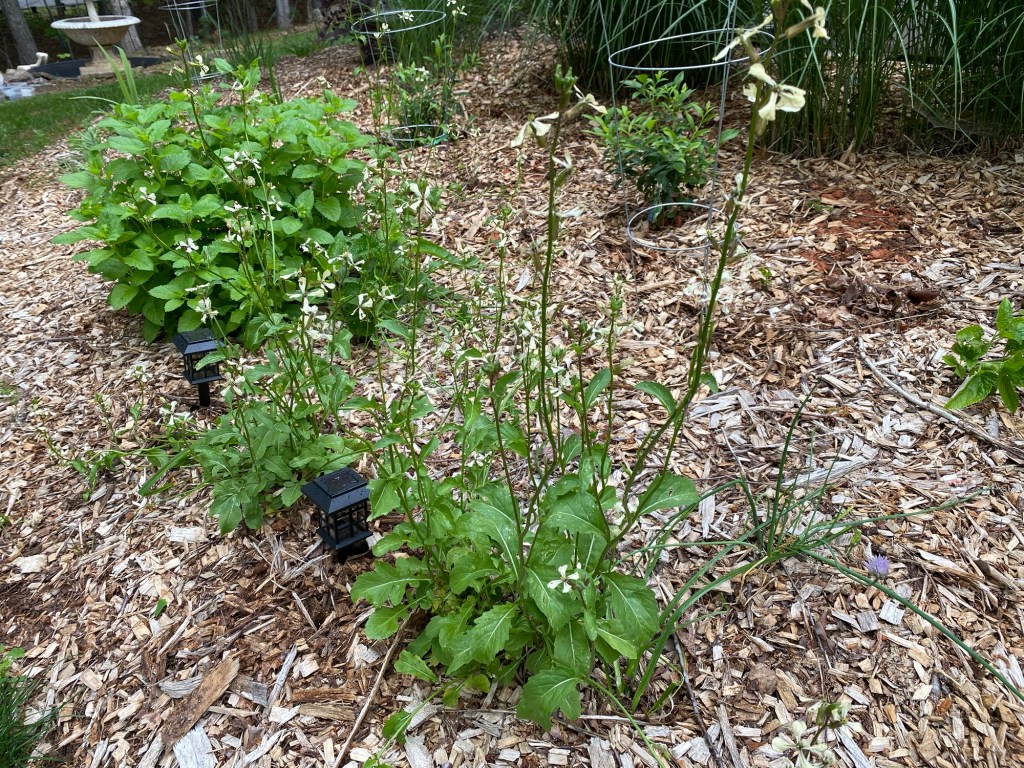
The three arugula plants by our air conditioner survived the mild winter and gave us some fresh greens in February and March. Now they’re flowering to attract insects. Behind them is a Lemon Balm plant, good for bees, butterflies, ladybugs, lacewings, and parasitic mini-wasps. If you have a permaculture landscape, lemon balm can be planted near brassica plants. If the lemon balm spreads in this spot, I’ll move some of it elsewhere.
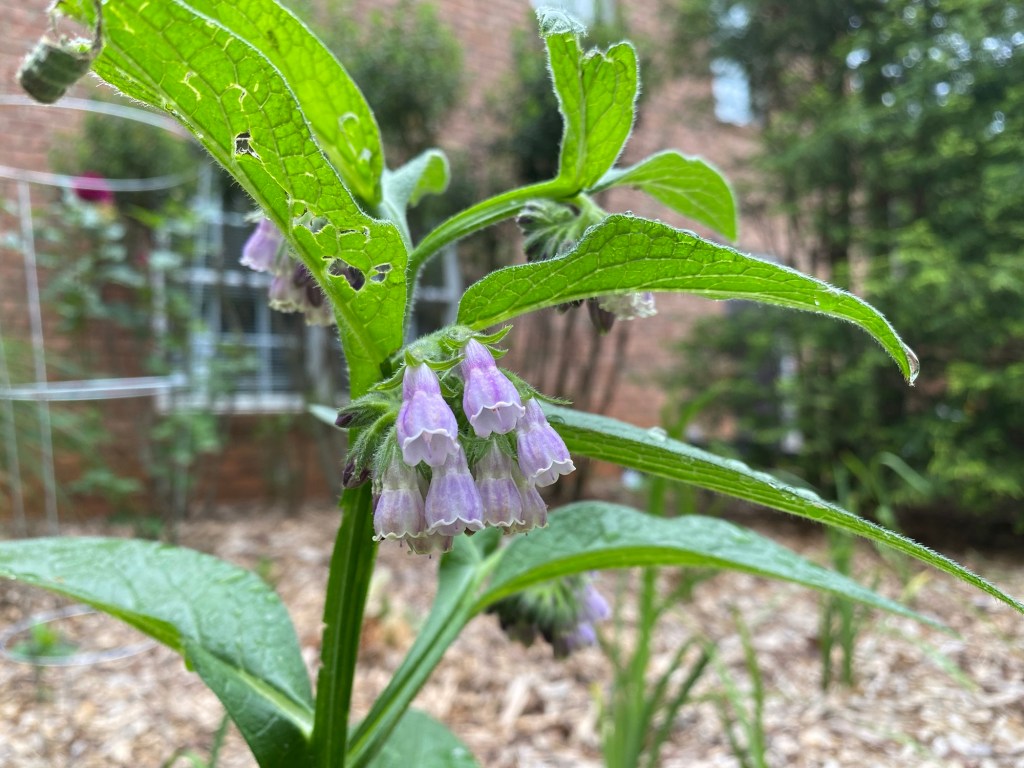
Comfrey is one of my favorite plants. In my old yard, I had 4 or 5 plants. My goal is to have about 15 to 20 plants spread through our beds.
This comfrey and another one by the front of the house came from dried comfrey roots I bought on Amazon. This past winter, I purchased comfrey seeds to grow inside and through winter sowing. Hopefully, the plants do well, though the dry weather during April has not helped. In the meantime, I started my first batch of comfrey tea which I’ll use as natural fertilizer on my fruiting plants.

Beardtongue attracts bees, butterflies, moths, wasps, and beetles. I bought this one last year for the leaf color which is a beautiful dark red/purple. In its second year, this Beardtongue is already about 2 feet tall and shows up well in my beds. However, they don’t like to be crowded. I plan on growing more from seed next winter.
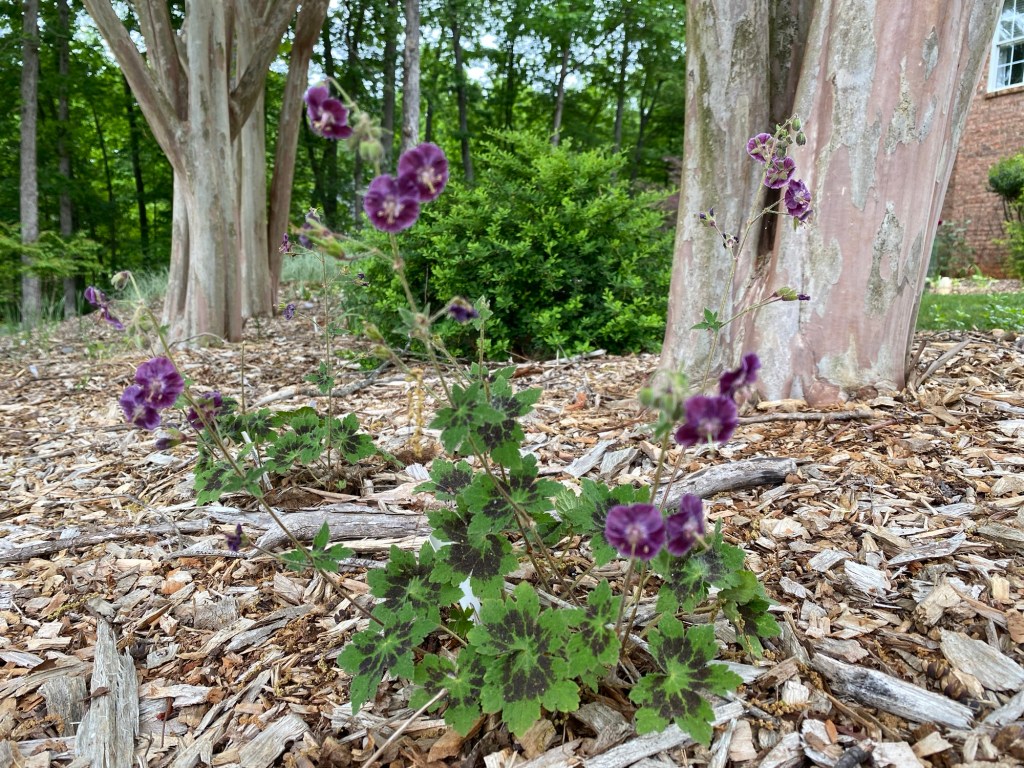
I love cranesbill geraniums! I brought one from my old home which I divided for my new home. I also bought these beauties last year for their variegated leaves and purple flowers. Generally, they attract bees.
Beneficial insects need water, food, and shelter. I’ve got the food covered. For the water, I’m setting out clay saucers and getting our fountain going again. For shelter, I’m going to build insect houses like this one on the Southern Exposure site. The Environmental Interpretative Center of the University of Michigan has 3 designs if you need help getting started.
 2 dogs and a house
Leave a comment