Despite the marauding deer, I have a number of plants doing things in the garden. Sometimes, I am an impatient garden, anxious to see the seeds I just planted pop up RIGHT NOW. Other times, I try to focus on the flowers and the progress I’ve made so far this year.
Unfortunately, one of these plants was deer food. But, I got a picture before it was eaten. I also made sure to spray all the roses, hostas, and other plants the deer like to eat. I have 2 sprays that I rotate between using. The directions call for monthly spraying; my sister-in-law goes for weekly spraying. I think I prefer her method since it becomes a regular habit.
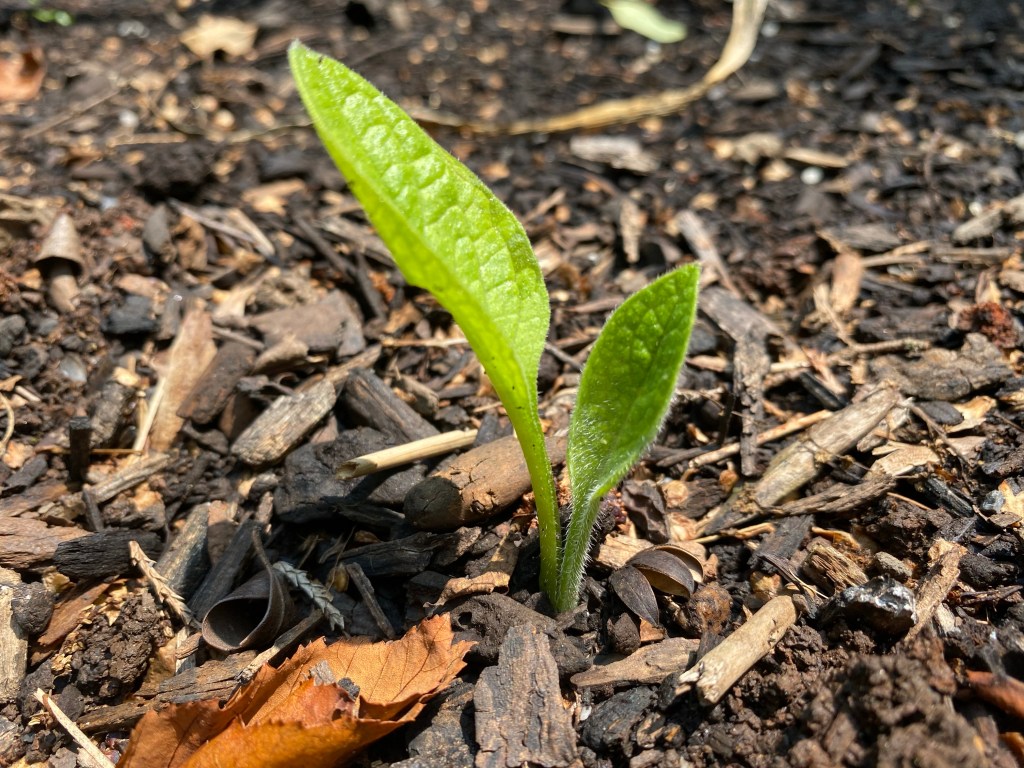
This is Comfrey. While comfrey can be used medicinally, (and check with your doctor before doing so), I like to add comfrey to my compost. I bought 12 Russian Comfrey live root cuttings from Amazon for $45. So far, only one has come up, though I’m hopeful the others will sprout, too. I do admit to not marking where I planted the live roots.
At our old house, I grew Comfrey in mostly full sun. It has a deep taproot with an extensive root system. While I’ve read cautions about the plant spreading, that was not my experience. Yes, the plant grows vigorously, however, it is fairly easy to contain. Comfrey doesn’t require any special care. It also attracts bees to the yard which is particularly beneficial if you have a vegetable garden nearby.
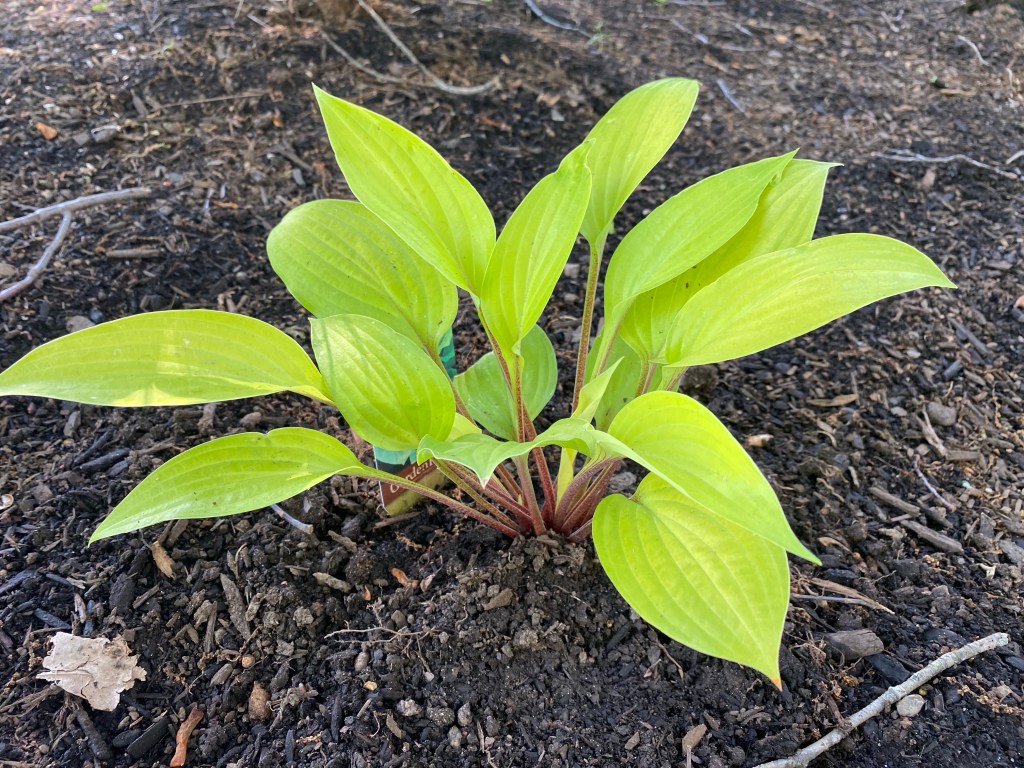
I picked up this chartreuse Hosta at a local gardening center that is relocating. I love the contrast between the leaves and the red stems. Unfortunately, the deer liked this plant, too. I like to use pops of color like this in my shade beds. In a few years, I hope to divide the hosta and spread it around the shade beds.
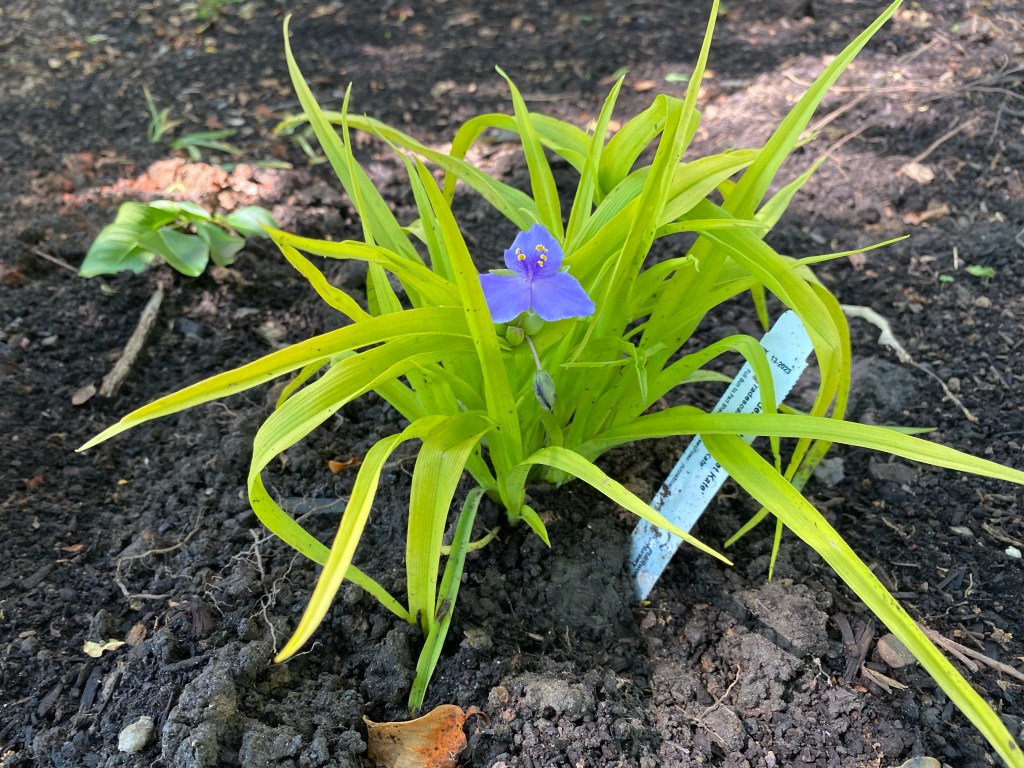
This chartreuse spiderwort came from the same gardening center. I have a few more spiderworts scattered around my yard. They grow to about 3 feet in height and are relatively easy to care for. They can be easily divided by digging up the plant and dividing it with a flat spade. Spiderwort attracts pollinators including native bees whose population is on the decrease due to the existence of bee hives. Spiderworts are supposed to self-seed though I haven’t had mine long enough to see if that’s true. Despite not having pest problems, I have found the deer nibbling on my spiderwort.

This gardenia is a bit of an experiment. From what I’ve read, gardenias only tolerate cold temperatures down to 20 degrees F. I may need to cover the plant to protect it in the winter.
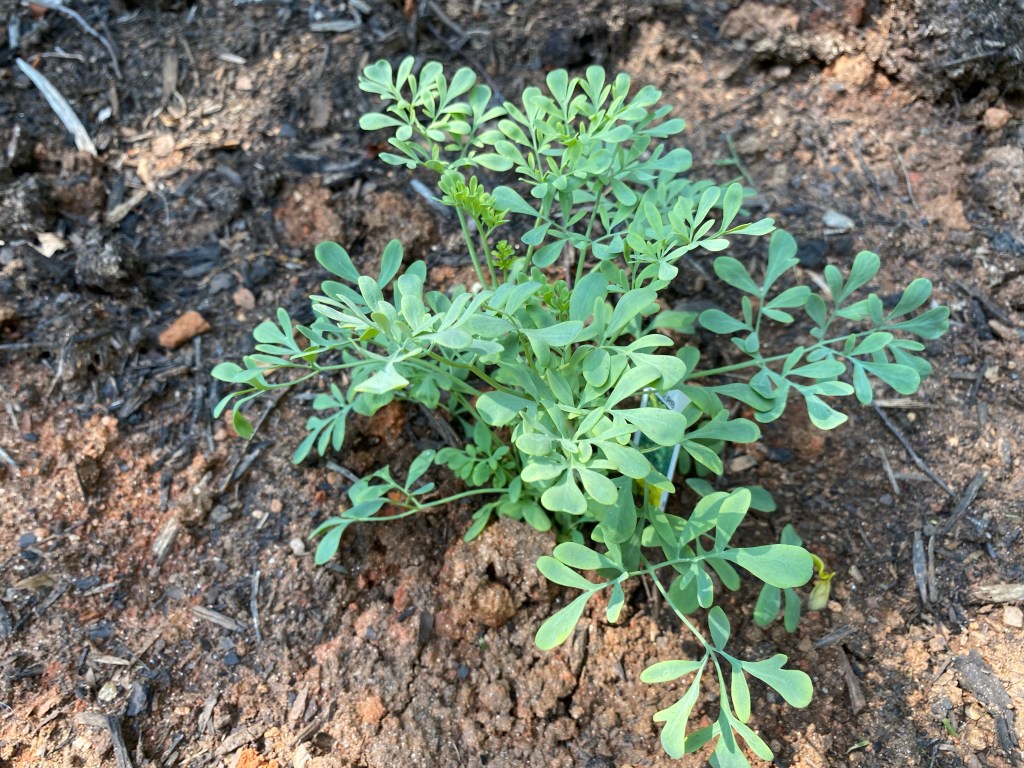
This rue is from a local garden center. I’ve never grown it before though I’ve read that it attracts swallowtail caterpillars. It grows into a woody shrub that tolerates hot and dry soil conditions. Depending on how the Rue does, I may end up moving it into the thyme bed that surrounds our property. The bed is full sun and full of clay soil. While Rue is generally used as a culinary herb, it must be avoided by pregnant women.
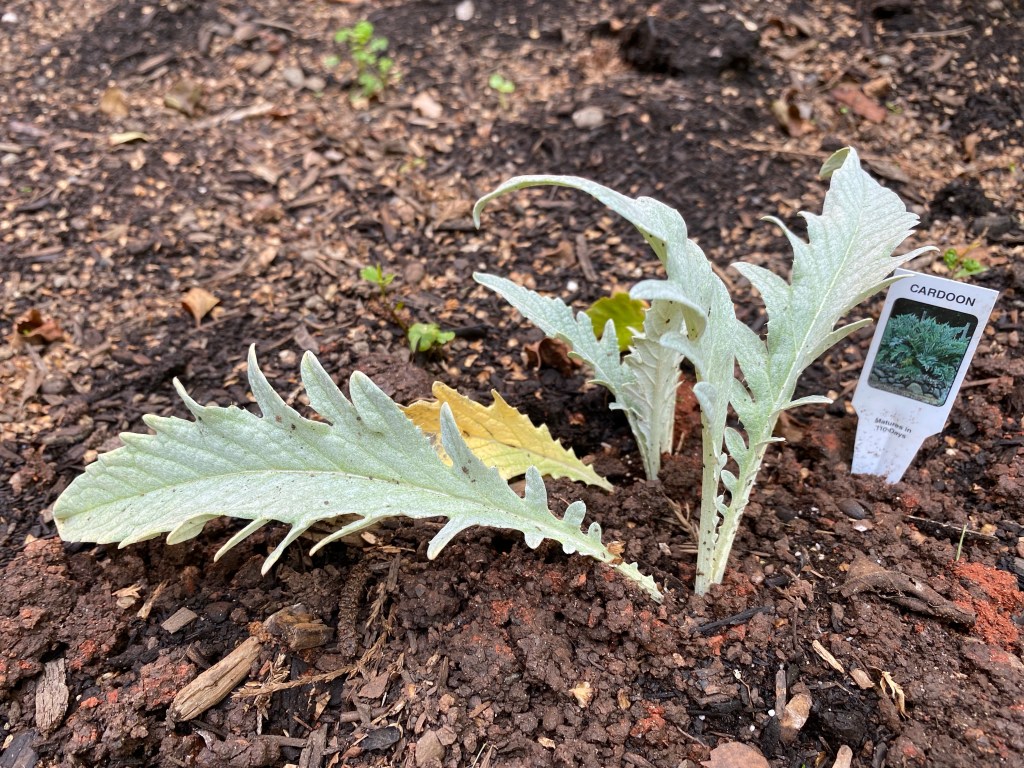
This fun-looking plant is the Cardoon which is a thistle. While similar to an artichoke, one eats the stems, not the flower buds. They can grow up to 5 feet tall and can grow like weeds. If it survives our zone 7 winter, I may end up moving it to the edge of my woodland bed and giving it lots of good soil.
 2 dogs and a house
Leave a comment