I’m back after being quiet here for too long. That’s a whole ‘nother post in itself about priorities and processing.
This is our second spring at our Virginia home. Oh, how I miss my Pennsylvania soil! I spent over 20 years dumping yards and yards of leaf mulch and compost on beds to create an amazing yard. I was a bit daunted last year about starting over, especially since this Virginia soil is simply clay. I don’t think the previous owner spent much time adding to the soil other than mulching on a regular basis. There are about 2 inches or so of decent soil and then hard clay.
Last year, I didn’t do much to improve the soil. I added homemade compost to the herb bed by the driveway. I added clay buster to one bed, and storebought manure to another bed. At some point, we built a 3-bin compost area at the back of the property. Any leaves we collected in the fall were dumped in an area known as my future woodland garden.
This year, I decided to invest time, effort, and some money into improving the soil. Last year, I had soil testing done which we used to determine how to improve the lawn this year. For the most part, the soil tested at 7.2 pHs. This spring, I put lime down to improve the soil and hopefully reduce the tick population. I have a product to add to the lawn before we lay seed in late August/early September. We learned last year that summertime is not the time to grow grass. I’m going to test about 5 more areas this spring to give us a full picture of our one-acre lot.
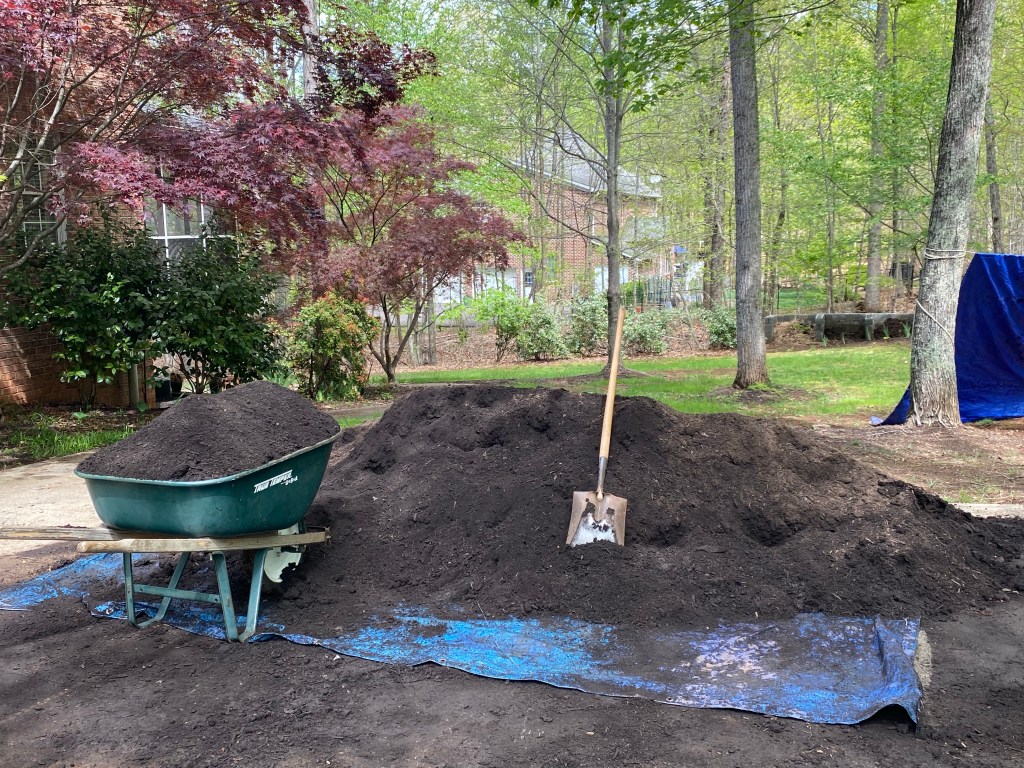
For the flower beds, I’m embarking on an intensive soil improvement program which will take at least 2 to 3 years to show results. Given the large scope of the program, I’m using the lasagna gardening method and time to build better beds. I’m starting with storebought compost from Royal Oak Farm bought via a local landscaping company. I was told the compost is made up of a variety of ingredients including clean industrial residuals, food processing plant discards, animal manures, sawdust, leaves, trimmings from local tree services, and agricultural byproducts such as straw, hay, and silage. According to the Royal Oak Farm website, the compost generally has the following breakdown: 1.1% N, 1.2% P, and 1.9% K with no guarantees.
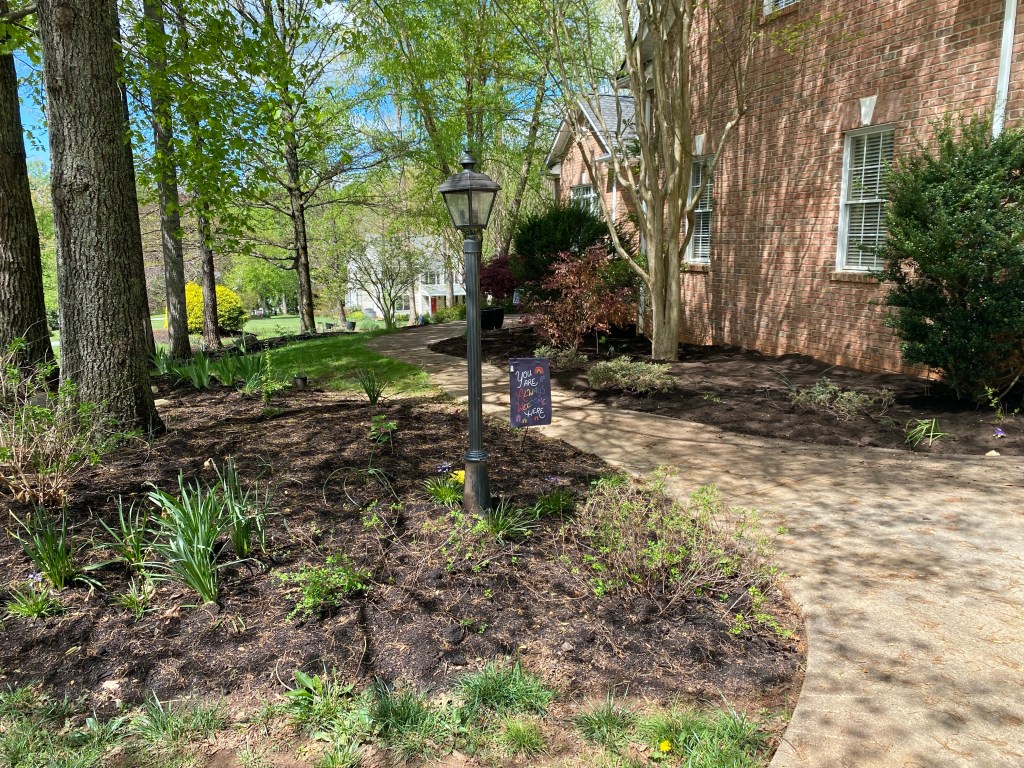
We started with approximately 10 yards of compost which we spread in a 2-inch layer on the beds. I need to order another 10 yards to finish; we’ll end up spending just over $1,000 on compost. Given the fineness of the compost, it could serve as a top dressing for well-developed beds. I think we’ll be adding compost again next year depending on the amount of earthworm activity in the soil. So far, I haven’t seen many earthworms.
By the way, this photo shows how shaded our lot is. We have about 20 – 30 mature trees, mostly black oak on the lot. Yes, that makes for a whole lot of leaves. It also makes a lot of shade which is different from my former Pennsylvania home. In PA, I had full sun which I loved.
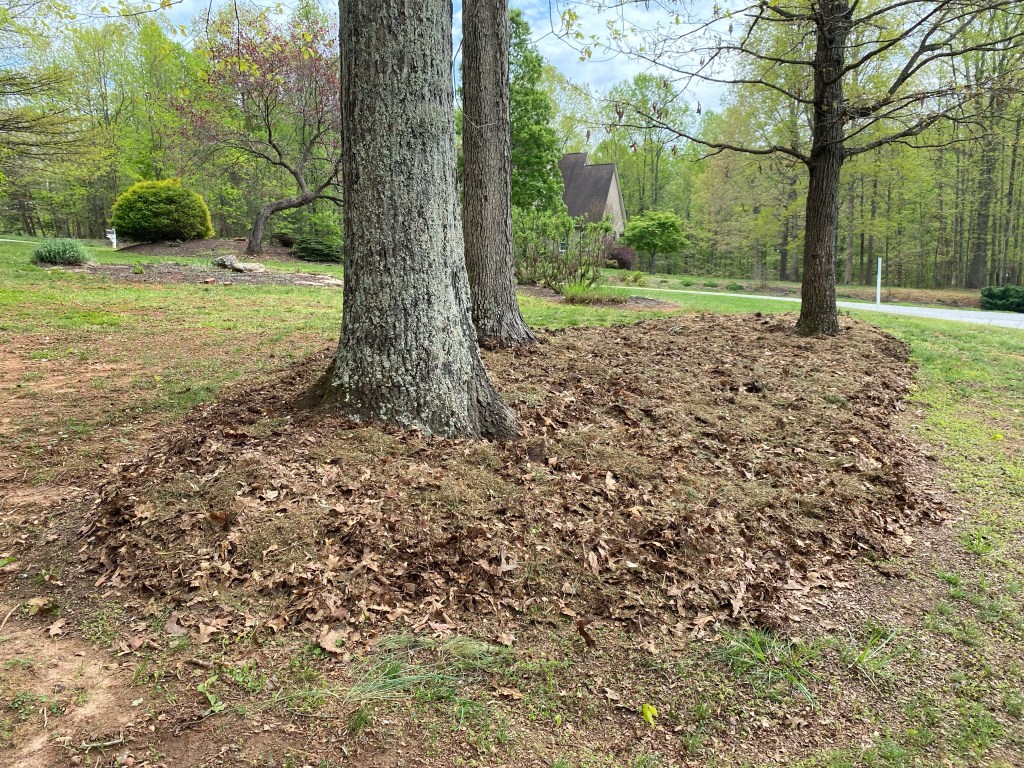
This particular bed runs along the side of our lot. There was another tree at the far end of the bed which my husband removed last summer. We need to rent a stump grinder to take care of the stump and another stump in the bed to the left. Removing the two trees gave us more light and also highlighted the crape myrtles to the left of this bed.
Since this bed is in the worst shape, I decided to put down a 4-inch layer of mostly decomposed leaves, lightly topped with grass clippings as the foundation. Next, I’ll add the Royal Oak compost and leaf mulch from a different landscaping company. Given the public location of the bed, I wanted to improve it as quickly as possible and begin planting. Last year, I put in a few daffodil bulbs, irises, and daylilies. I’m adding more daffodils for next spring, plus irises from elsewhere in the yard.
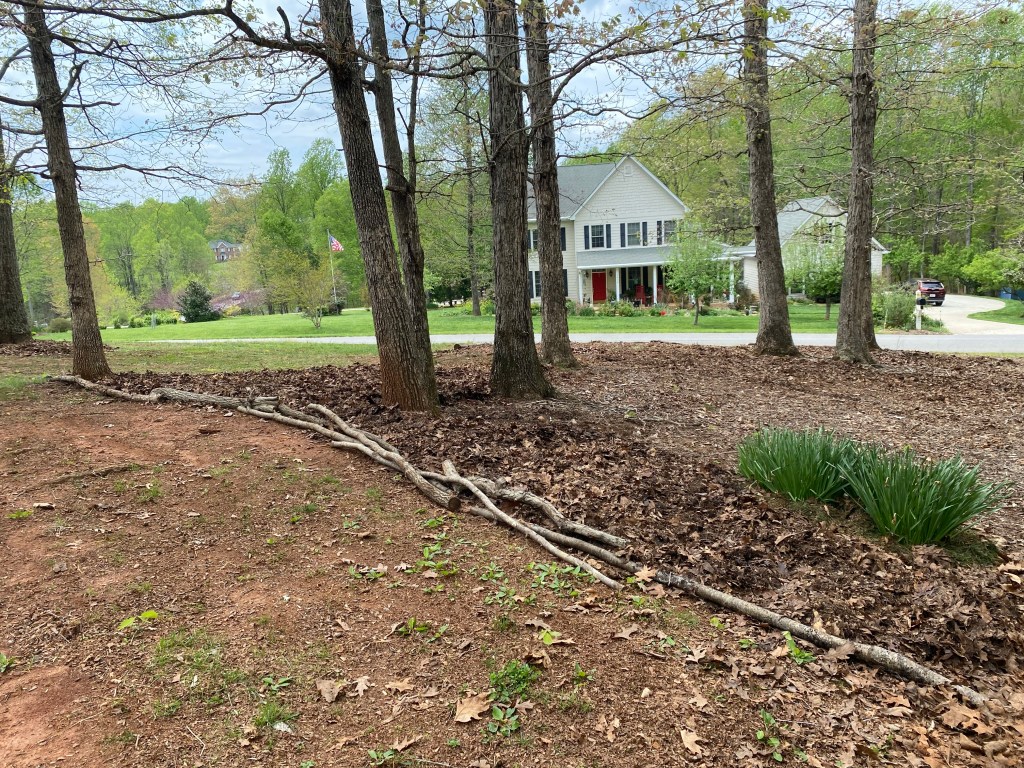
This area is the future location of a woodland garden. According to my husband, this is the drainage field for our septic tank. The soil tested at 5 pHs which may or may not be a result of that. I honestly don’t know. From what I’ve read so far, we need to avoid compacting the soil in this area, and there shouldn’t be any trees here. When we have someone empty the septic tank this year, we’ll discuss the situation. I have a feeling it may be best to leave the trees where they are and have a naturalized garden with minimal use over top. We won’t be able to have a vegetable garden anywhere near here given the potential for contamination of the plants.
I decided to start building toward my future garden this year. I spread out the collected leaves and installed a natural barrier to help with water runoff. In a few weeks, I’ll be digging up the daffodils and spreading them around this area for a more naturalized look.
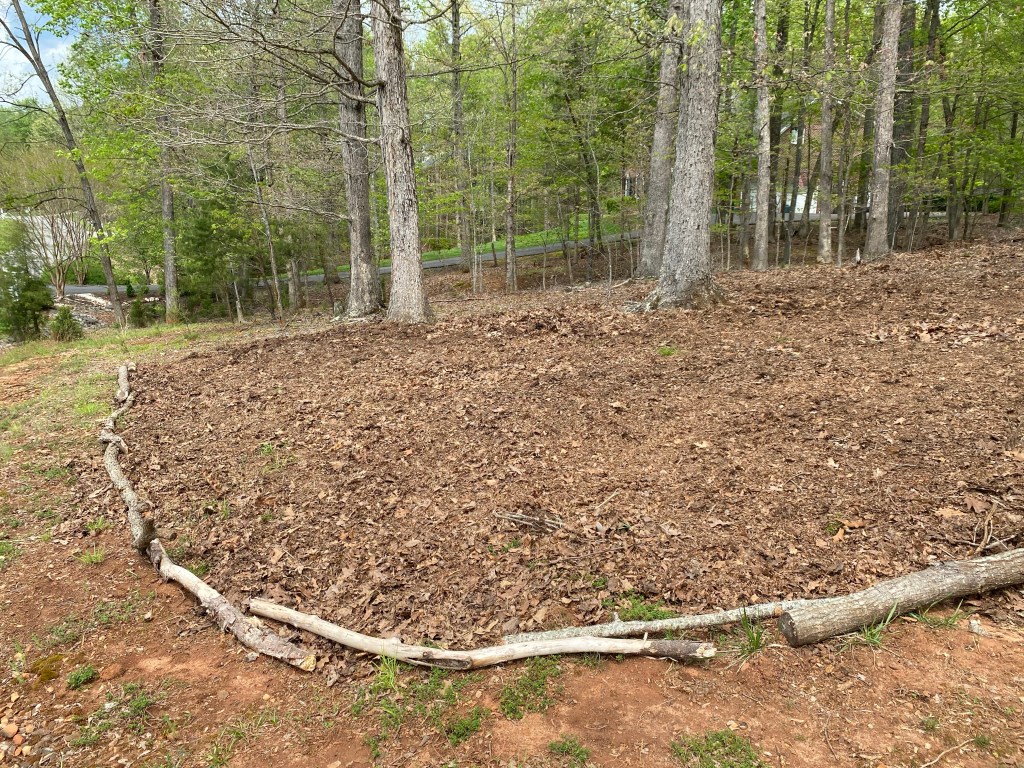
This is the front of the wooded area, and the part closest to the street. At some point, rocks were installed to the left of the logs to help direct water to the stream at the back of the property. We will need to install a dry river bed to create better drainage.
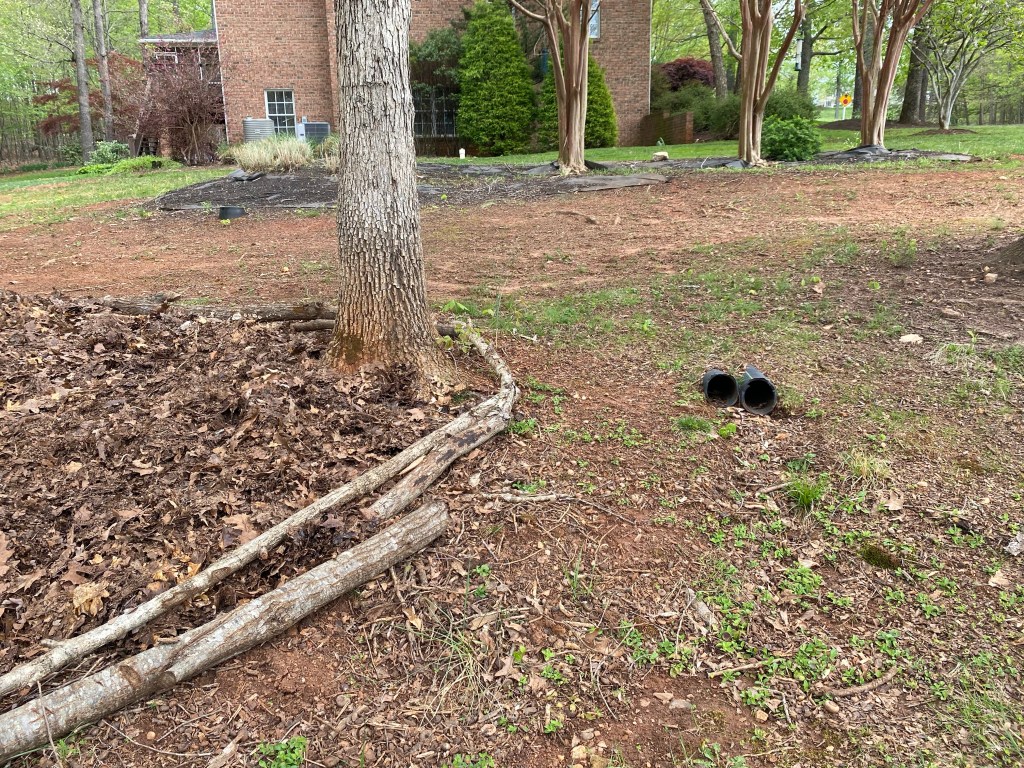
This is the main source of water in the area next to the septic field. All of the gutters feed into a system of underground pipes like these which carry the water away from the house. Unfortunately, this area was not landscaped properly to prevent erosion of the soil. We’re going to create a dry river bed starting above the end of the drainage pipes to help send the water down the hill without creating a mess.
More gardening projects coming this week!
 2 dogs and a house
Leave a comment